The Modern Wealth Stack: How to Combine Investments for Maximum Growth

Investing today isn’t about picking a single “winning” asset. The modern approach is a wealth stack—layering multiple income sources and assets to maximize growth while managing risk. Think of it as building a portfolio ecosystem rather than betting on one horse.
Why the Wealth Stack Works
Traditional investing often focuses on one type of asset, like buying individual stocks or a single rental property. The problem? Markets fluctuate, and relying on a single source of growth can expose you to unnecessary risk.
A wealth stack works because:
- Diversification reduces risk – when one asset underperforms, another can compensate (Investopedia on Diversification).
- Passive income compounds faster – multiple streams accelerate wealth accumulation.
- Flexibility grows confidence – you can adjust your allocations without overhauling your entire portfolio.

Core Layers of the Wealth Stack
Layer 1: Stocks
- Growth stocks – high potential returns but higher volatility (Top Growth Stocks 2026).
- Dividend stocks – steady income while your investments grow (Dividend Investing Guide).
- ETFs & Index Funds – broad market exposure with lower management hassle (Best ETFs for Beginners)
💡 Tip: Start with ETFs for stability, then add individual stocks as your confidence grows.
Layer 2: Real Estate
- Rental properties – long-term cash flow plus appreciation potential (Beginner’s Guide to Rental Properties).
- REITs – invest in real estate without managing tenants
- (What is a REIT?).
- Vacation or short-term rentals – higher income potential but requires more active management (Airbnb Hosting Tips)
Layer 3: Digital & Alternative Assets
- Cryptocurrency – high risk/reward; keep small allocation (Crypto Investing Basics).
- Crowdfunding & startups – access to private growth opportunities (SeedInvest Platform).
- Peer-to-peer lending / fintech platforms – passive returns outside traditional markets (LendingClub Review).
⚠️ Note: Keep digital assets small to protect against extreme volatility.
Passive Income Layering Strategy
Think of layering income like stacking blocks:
- Base layer: Stable income streams (dividend stocks, REITs)
- Middle layer: Growth-focused assets (stocks, digital investments)
- Top layer: High-risk/high-reward opportunities (startups, crypto)
By stacking this way, your portfolio continues to grow even if one layer underperforms.
Balancing Risk Across Asset Classes
Risk management is essential in a wealth stack:
- 60/30/10 model: 60% stable, 30% growth, 10% speculative (Portfolio Allocation Guide)
- Adjust over time: Reduce high-risk exposure as your wealth grows, increase stable assets.
- Regular review: Rebalance annually to maintain target allocation.
🚀 Stay Ahead with the Modern Wealth Stack
Want more practical investing tips, portfolio examples, and step-by-step guides delivered straight to your inbox?
Subscribe to our newsletter and get:
- Exclusive wealth stacking strategies (Learn more about Wealth Stacking)
- Market insights and trend updates (Investing News & Trends)
- Free guides and downloadable resources (Beginner’s Guide to Investing)
📧 Enter your email below and join our community of smart investors:
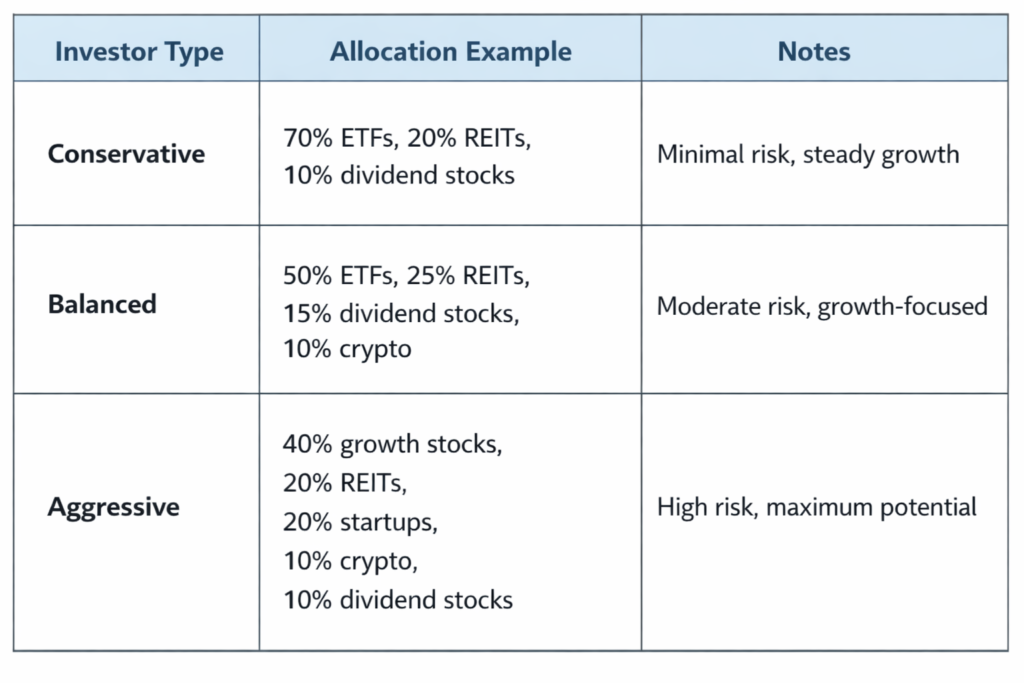
Example Wealth Stack Portfolios
Key Takeaways
- The wealth stack is about systems, not luck.
- Diversification across multiple assets reduces risk while increasing potential returns.
- Layering income streams ensures you’re making money even when markets dip.
- Review and adjust regularly to keep your stack aligned with your goals.